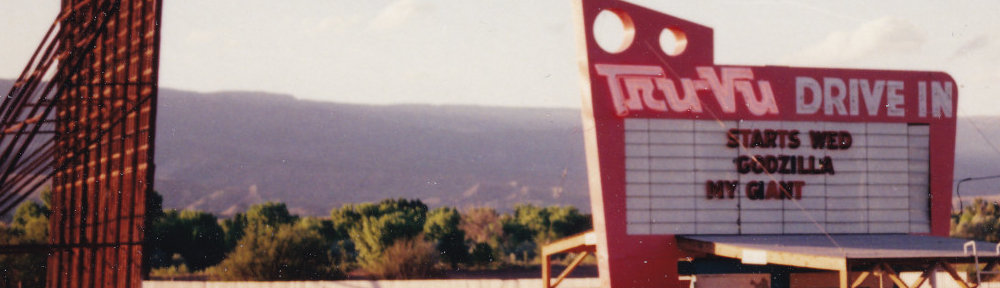
Honda to spend a month promoting drive-ins

What does Honda have in common with drive-ins? Until recently, I’d say the closest link was The Beach Boys’ 1964 album All Summer Long, which included the songs Little Honda and Drive-In. The former was an international hit, and I often hear the latter at drive-in theaters. In fact, I’d say that Drive-In is probably the best drive-in celebration song of all time. But I digress.

Almost 50 years later, Honda is about to give us a much better reason to connect it with drive-in theaters. This Friday, Honda will launch Project Drive-In, a month-long effort to raise awareness of the wonderful, fragile state of drive-ins today. The best part is that Honda will effectively rescue five drive-ins from oblivion, paying for new digital projection equipment. And you get to pick which drive-ins get saved.

According to Jessica Fini of Honda Public Relations, visitors to Project Drive-In will be able to cast their votes for their favorite drive-in out of a list of over 50 that need help. Some of those drive-ins were chosen by Honda, and others were added after they heard about the promotion and asked to be included. Voting will run through September 9, and a couple of weeks later, Honda will present checks or equipment to the five winners.

Fini said that she hopes that raising general awareness about the drive-ins in need might even help the theaters that don’t finish in the top five. And why is Honda so interested? “A lot of people have an emotional attachment to drive-ins,” Fini said. “We started hearing about all the drive-ins that are in trouble. It’s just a natural connection for us to raise this effort further through a social media promotion.”

As the Maine Sun Chronicle reported recently, Honda has been busy filming some videos to run in conjunction with this promotion. Fini told me that they won’t be used as TV ads (darn!) but will be featured on the Project Drive-In site. So spread the word, and get ready to vote early and often to keep your favorite drive-in alive.

I’ll trade a Western for your drive-in photo

Western DVDsSpeaking of Westerns and speaking of DVDs made me think of a program to encourage you to get more involved with the Carload Flickr pool. In the months that the pool has been active, I’ve been the only one to submit photos for it, which leads me to believe that you have not yet considered how wonderful it would be to support your favorite drive-in news blog by chipping in. Therefore, I will try a small incentive.

The next four three people to submit a real, usable drive-in photo to the Carload Flickr pool will receive a free DVD containing at least one drive-in western. (Please do not watch your DVD during drive-in season; save it for when you local drive-in theater is closed.) Here’s what you need to do:

  1. Find an old drive-in related photo that you took or otherwise have full rights to reproduce. Or take a new picture of your local drive-in.
  2. Upload it to the Carload Flickr pool. It’s all pretty simple once you get a Flickr account. By submitting your photo, you agree that Carload may use your photo; please read the group rules for a few more details.
  3. Send me (NeonMichael) a FlickrMail by clicking the three dots on the right side of my Flickr home page and choosing Send FlickrMail. Include your email address and postal address so I can get in touch with you and mail you a DVD.
  4. As soon as I verify that your submitted photo is legit, I’ll stick your DVD in the mail. I’ll pay the postage (US only). Just like that.

I probably need to add some legaleze here, but I’m not sure what to say. This offer is open to US residents only, because it’s a pain to mail stuff to other countries. Limit one free DVD per household, but you’re welcome to contribute as many photos as you’d like. I might end this promotion at any time, especially when I run out of DVDs. If you have any questions, please leave a comment. Thanks for reading, and thanks for your support of Carload.com.

Drive-in killer now helping resurgence

Video Cassette Recorder

Everybody knows when you go to the show
You can’t take the kids along.
You’ve gotta read the paper and know the code
Of G, PG and R and X.
And you gotta know what the movie’s about
Before you even go.
Tex Ritter’s gone and Disney’s dead
And the screen is filled with sex.
— written by two of The Statler Brothers

That snippet of lyrics is from Whatever Happened To Randolph Scott?, a minor country hit in 1974 by The Statler Brothers. The song plays in full no less than three times during the 1976 film Drive-In, which I recorded off Antenna TV a little while ago. Hearing that refrain crystallized a thought that’s been bouncing around in me for a while – one of the major factors driving the decline of drive-in theaters has become a strong indirect reason for their resurgence.

When drive-ins’ popularity exploded in the 1950s, a patron could bring the whole family with an expectation that the film would be appropriate for all of them. Even gritty film noir movies were no worse than suggestive; any mature themes flew over the heads of the youngest viewers. More common were musicals, family-friendly dramas, and yes, lots of westerns with simple, basic plots and values.

In the 1960s, the movie studios recognized what they could offer that television couldn’t: mature content. Except for infrequent Disney offerings, movies became more complicated and adult, eventually leading to the creation of the MPAA ratings system. During this time, and into the 1970s, drive-ins continued to have a hard time procuring recent, popular movies, so they turned more often to exploitation movies, increasingly spattered with gore and sex. Drive-ins stopped being so family-friendly, but many of them hung on.

The VCR was arguably the single biggest killer of drive-in theaters. At worst, it was the final nail in the coffin after Daylight Saving Time, cable movie channels, and Hollywood’s shift away from family-friendly movies. By the early 1980s, most families could stay inside and watch a stack of rented movies any night, and the drive-in lost its appeal as quantity entertainment.

Then a funny thing happened. Families discovered that playing a tape of an animated movie or other kid-centric entertainment made their youngsters very happy. They rented more tapes, and movie stores purchased more tapes. As studios began to recognize the huge market in animated VHS tapes, and later DVDs, they started making more animated films with an eye toward long-term profit.

That’s where we are today. Drive-ins can offer family-friendly animated movies essentially every week of the year, and families are responding by filling their lots again. Since drive-in theater economics hinge on the concession stand, getting a horde of hungry kids is a great way to improve profits. For the drive-ins that survive the digital conversion, the future looks better than ever. And the biggest reason so many drive-ins died in the 1980s is now the driving force behind the content that brings in all those families.