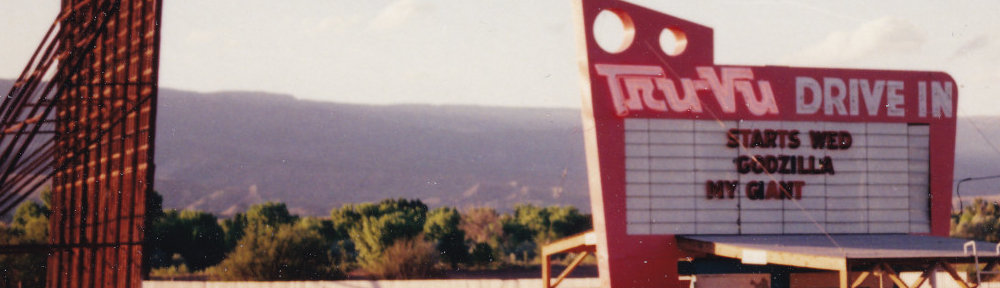
Drive-in killer now helping resurgence

Video Cassette Recorder

Everybody knows when you go to the show
You can’t take the kids along.
You’ve gotta read the paper and know the code
Of G, PG and R and X.
And you gotta know what the movie’s about
Before you even go.
Tex Ritter’s gone and Disney’s dead
And the screen is filled with sex.
— written by two of The Statler Brothers

That snippet of lyrics is from Whatever Happened To Randolph Scott?, a minor country hit in 1974 by The Statler Brothers. The song plays in full no less than three times during the 1976 film Drive-In, which I recorded off Antenna TV a little while ago. Hearing that refrain crystallized a thought that’s been bouncing around in me for a while – one of the major factors driving the decline of drive-in theaters has become a strong indirect reason for their resurgence.

When drive-ins’ popularity exploded in the 1950s, a patron could bring the whole family with an expectation that the film would be appropriate for all of them. Even gritty film noir movies were no worse than suggestive; any mature themes flew over the heads of the youngest viewers. More common were musicals, family-friendly dramas, and yes, lots of westerns with simple, basic plots and values.

In the 1960s, the movie studios recognized what they could offer that television couldn’t: mature content. Except for infrequent Disney offerings, movies became more complicated and adult, eventually leading to the creation of the MPAA ratings system. During this time, and into the 1970s, drive-ins continued to have a hard time procuring recent, popular movies, so they turned more often to exploitation movies, increasingly spattered with gore and sex. Drive-ins stopped being so family-friendly, but many of them hung on.

The VCR was arguably the single biggest killer of drive-in theaters. At worst, it was the final nail in the coffin after Daylight Saving Time, cable movie channels, and Hollywood’s shift away from family-friendly movies. By the early 1980s, most families could stay inside and watch a stack of rented movies any night, and the drive-in lost its appeal as quantity entertainment.

Then a funny thing happened. Families discovered that playing a tape of an animated movie or other kid-centric entertainment made their youngsters very happy. They rented more tapes, and movie stores purchased more tapes. As studios began to recognize the huge market in animated VHS tapes, and later DVDs, they started making more animated films with an eye toward long-term profit.

That’s where we are today. Drive-ins can offer family-friendly animated movies essentially every week of the year, and families are responding by filling their lots again. Since drive-in theater economics hinge on the concession stand, getting a horde of hungry kids is a great way to improve profits. For the drive-ins that survive the digital conversion, the future looks better than ever. And the biggest reason so many drive-ins died in the 1980s is now the driving force behind the content that brings in all those families.

Drive-in movie coming to a TV near you?

There are a lot of movies that are easy to find. They’re available for streaming through Netflix, or in high rotation on cable TV channels, or in the markdown bin where you buy DVDs. Then there are special, cult movies that are unavailable to rent and cost serious cash to buy. One of those movies, one you might care about, is the 1976 classic Drive-In, which is coming to Antenna TV at 3 in the early morning (Eastern time) this Tuesday, July 23, otherwise known as the late, late night of Monday, July 22. (It repeats at 7 am EDT this Thursday, and again at 5 am EDT on July 27.)

Antenna TV is one of those digital sub-channels that are available for free from over-the-air broadcasters. Some cable systems it, but you might have to resort to hooking up your digital TV to a real antenna. You can find a full list of Antenna TV stations in this PDF.

Here’s Amazon’s description of Drive-In: This slice-of-life comedy both documents and satirizes small town life in a rural Texas town where the only entertainment in the day is the roller rink and at night the local drive-in. Hosting a cross-section of the town’s population, the drive-in comes to life at night – parents show up with their kids in tow, teenage paramours arrive with their dates, and the local gangs fuel their rivalry – under the gigantic screen and at the snack bar. The film playing is a ’70s staple: the disaster movie. (A satire named Disaster ’76.) Tension builds on the screen and also among the patrons. Director Rod Amateau, producer/director of legendary television series “The George Burns and Gracie Allen Show” and “The Many Loves of Dobie Gillis,” is no stranger to comedy, and this off-beat, little-known film (with a lesser-known cast) is a hilarious flashback to the seventies.

There’s a pretty good 70s country music soundtrack. but the movie’s main appeal is that it gives us a pretty good idea of what it was like to go to a drive-in movie back then. Reviewers from Amazon and IMDB recommend it, and I do too. Especially this week when you can see it for free.

Media outlets celebrate 80 years of drive-ins

Fiesta Drive-In screen

photo by Neon Michael, from the Carload Flickr pool

Rather than adding separate posts about everybody celebrating the 80th anniversary of the drive-in theater, I’ll put them all together for you here so you can read as many of them as you want.

  • USA Today picked up a Cherry Hills NJ Courier-Post story. The best part is a photo of the first drive-in courtesy of Pauline Hollinghead, the inventor’s nephew’s wife.
  • Philly.com ran an article with a different photo of that first drive-in. The article adds some perspective I hadn’t seen elsewhere. “The theater opened in an era when Admiral Wilson Boulevard and adjacent Crescent Boulevard (Route 130) were lined with flashy attractions and establishments of all sorts, including a dog-racing track, an airport, and an enormous Sears department store (now undergoing demolilition).”
  • Gadling.com used the occasion for an interview with Craig Derman, photographer of The Drive-In Project, a look at abandoned drive-in movie theaters across America. And it shows a picture of the Comanche (Buena Vista CO). Hey, the Comanche isn’t abandoned!
  • The Connecticut Post ran a slide show of classic drive-in photos, leading off with the iconic Life Magazine photo with Charlton Heston that we talked about earlier.
  • ABC News ran a different set of black and white drive-in photos, mostly from Getty Images.
  • Parade had yet another slide show.
  • The press release web site PRWeb.com used the anniversary to promote the Family Drive-In Theatre (Stephens City VA) as part of Go Blue Ridge Travel’s “Kids Bucket List“. Have we already forgotten what “bucket list” means? Do kids around there have a high mortality rate?
  • The Kentuck Art Center (Northport AL) commemorated the occasion in its monthly Art Night with an outdoor screen looping vintage intermission ads and a drive-in themed photo booth for visitors to use, according to the University of Alabama’s The Crimson White.
  • Finally, the Orange County Register posted a great infographic (PDF) about the rise and fade of drive-ins through the years. Check it out!